
The Outer Banks (OBX) of North Carolina sit at the intersection of warm Gulf Stream currents and cool inshore waters. This convergence creates one of the richest nearshore fisheries on the East Coast, especially during the summer. With only a short run from the beach, fishermen can access a wide variety of hard-hitting, great-tasting, and often migratory species that make their way through OBX waters between late spring and early fall.
This article covers the primary nearshore game fish available during the summer months, why they matter to fishermen, how they behave, and the most effective ways to catch them.
What Counts as Nearshore in the OBX
Nearshore fishing in the Outer Banks typically refers to waters from the beachline out to about 10 to 20 miles, depending on species targeted. It’s past the surf zone and inlets, but not so far offshore that you’re hitting deep Gulf Stream territory. These waters include near-coastal wrecks, reefs, shoals, and temperature breaks where bait and predators gather.
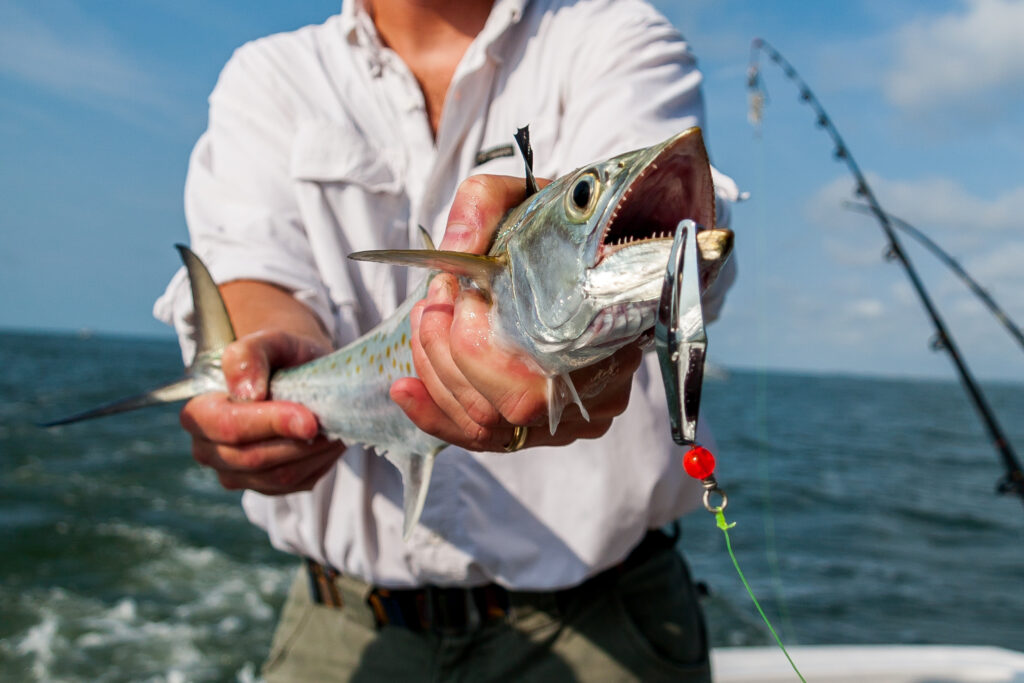
Spanish Mackerel
Why Target Them: Spanish mackerel offer fast action, visual surface bites, and excellent table fare. They’re also one of the most common and accessible species for nearshore summer trips.
Identification and Behavior: Spanish mackerel are streamlined, silver fish with bright yellow or olive spots scattered across their sides. Most average 1 to 3 pounds, but larger ones push 5 to 6 pounds. They move in dense schools and are most active during daylight, often slashing through bait pods near the surface.
Where to Find Them: They prefer water temps between 70 and 80 degrees and are commonly found within 1 to 5 miles off the beach, especially around bait-rich zones like rips, sandbars, and near inlets.
How to Catch Them:
- Trolling small spoons behind #1 or #2 planers is highly effective.
- Casting flashy metal jigs or Got-Cha plugs into visible schools.
- Use light wire leaders to prevent bite-offs.
King Mackerel
Why Target Them: King mackerel (kings) provide screaming drag runs and solid weight, often over 20 pounds. Larger “smokers” are a prized catch, especially on light tackle.
Identification and Behavior: Kings resemble Spanish mackerel but grow much larger (commonly 10 to 30 pounds, with 40+ pound fish possible). They have greenish backs, long slender bodies, and a more pronounced lateral line dip. Kings are solitary or in small groups and feed aggressively on live bait.
Where to Find Them: From late spring through early fall, kings stage just off the beach near bait schools, wrecks, and structure. Water between 68 and 78 degrees is optimal.
How to Catch Them:
- Slow trolling live bait (menhaden, bluefish, threadfin herring) with stinger rigs.
- Drone spoons and weighted feathers work on fast trolls.
- Downriggers help get baits into deeper strike zones.
Cobia
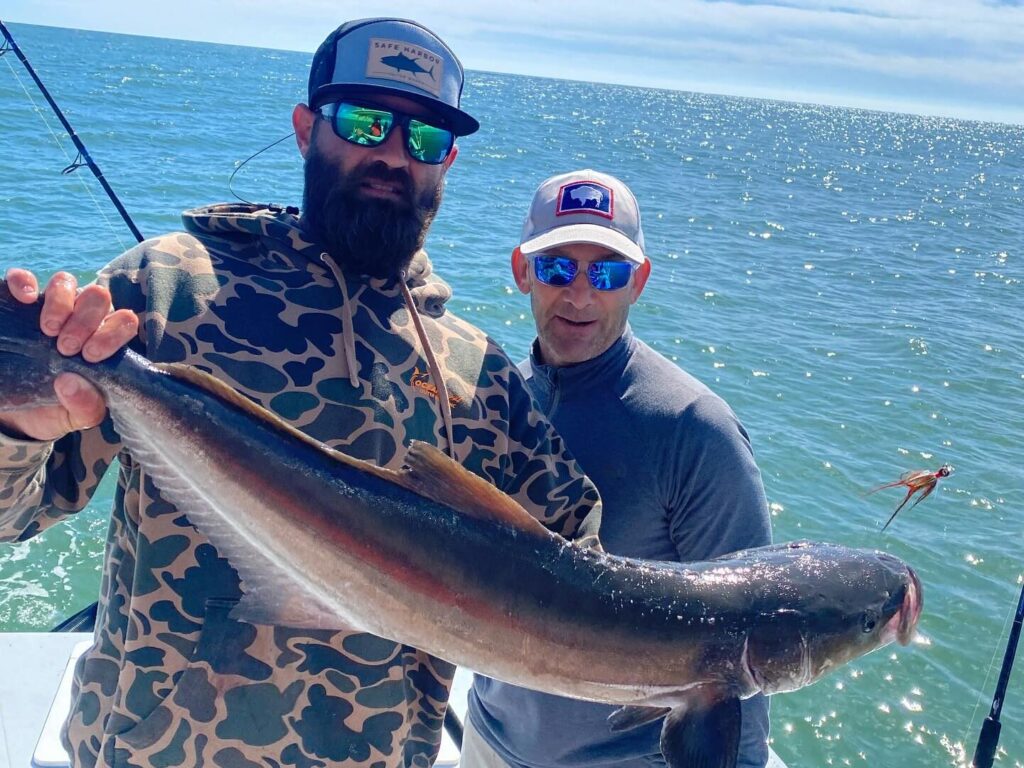
Why Target Them: Cobia are powerful, unpredictable, and make for top-tier table fare. Their migratory pattern brings them through OBX waters each summer, and sight casting to them is one of the most exciting ways to fish.
Identification and Behavior: Cobia are brownish-gray with a broad head and long torpedo shape. Often mistaken for sharks when cruising. Adults range from 20 to 60 pounds. They often follow rays, turtles, or debris and will come right up to the boat.
Where to Find Them: In late spring and summer, look for them around buoys, channel markers, bait balls, and cruising just under the surface near the beach and out to 10 miles.
How to Catch Them:
- Sight casting with bucktail jigs, live eels, or large soft plastics.
- Chumming over wrecks or inlets to bring them in.
- Bring heavy spinning gear and be ready to throw quickly.
False Albacore
Why Target Them: These hard-charging fish offer blistering runs and non-stop action. While not typically kept for food, they’re a favorite for light tackle and fly fishermen.
Identification and Behavior: False albacore (little tunny) are part of the tuna family. They have torpedo bodies, irregular dark patterns on their upper backs, and no scales. They average 5 to 15 pounds. Fast-moving schools blitz bait and move quickly.
Where to Find Them: Look for them near the surface busting on bait, especially near tide lines and shoals. They often follow glass minnows and anchovy schools.
How to Catch Them:
- Casting epoxy jigs or metal lures into surface frenzies.
- Run-and-gun tactics to chase down surface action.
- Long leaders and fast retrieves are key.
Amberjack
Why Target Them: If you want to test your back and tackle, amberjack (AJs) will oblige. They’re known for sheer strength and refusal to give up.
Identification and Behavior: AJs are bronze or olive with a dark diagonal stripe from the eye to dorsal fin. They average 20 to 40 pounds but can exceed 70. Found around structure, they are aggressive, often schooling over wrecks and towers.
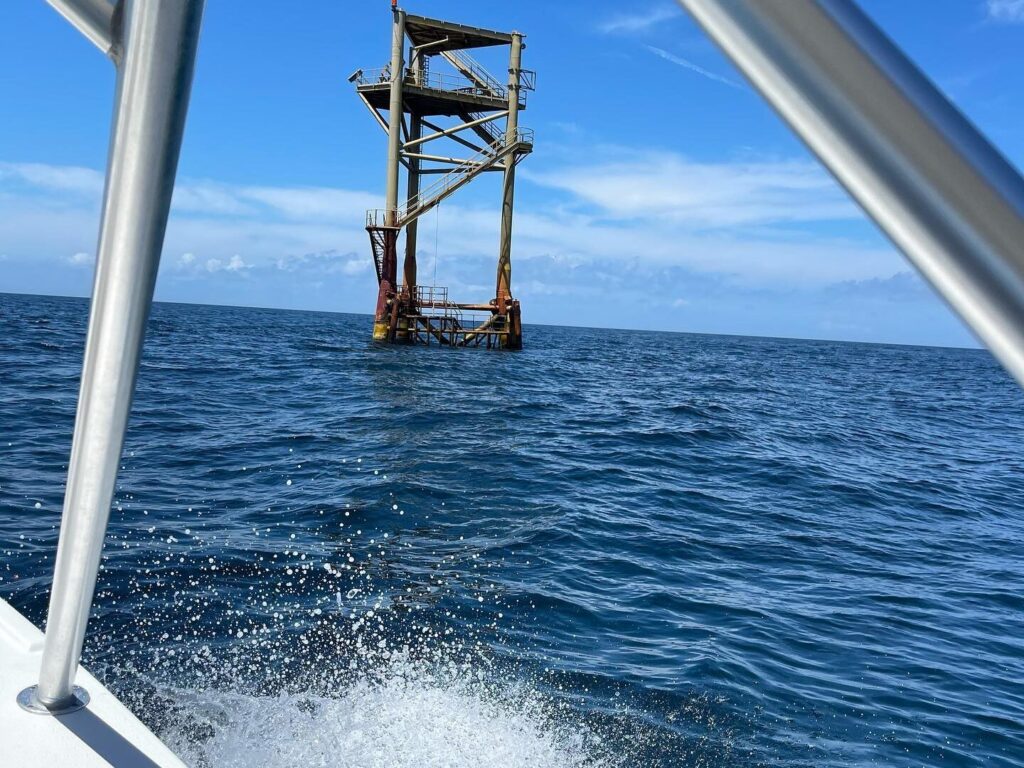
Where to Find Them: Nearshore wrecks, reefs, and towers within 10 to 20 miles hold amberjack in summer. They stack up deep but can be enticed upward.
How to Catch Them:
- Vertical jigging over wrecks.
- Live bait fishing with blue runners or pinfish on heavy spinning or conventional gear.
- Expect long, grueling fights near structure.
Mahi Mahi (Occasionally)
Why Target Them: Mahi are rare in close, but every summer brings a few days where they move unusually close to shore. They’re colorful, aggressive, and top-tier on the plate.
Identification and Behavior: Mahi (dolphinfish) are electric green and yellow, often changing color in the water. Males have blunt foreheads, females rounded. Most nearshore catches are peanuts (5 to 15 pounds), but larger fish are possible.
Where to Find Them: Occasionally found around weed lines, floating debris, or bait lines within 10 to 15 miles. This usually happens during sustained warm currents near shore.
How to Catch Them:
- Casting or trolling small skirted baits or jigs near floating debris.
- Keep one fish in the water to hold the school.
Bluefish
Why Target Them: Bluefish are aggressive, hit hard, and often come in massive schools. Their ferocity makes them a great introduction for kids or new fishermen.
Identification and Behavior: Blues are steel blue on top, silvery sides, with a forked tail and razor teeth. Most nearshore blues are 2 to 8 pounds in summer, though choppers over 10 pounds show up.
Where to Find Them: Schools often feed near inlets, shoals, and bait pods just off the beach. They’re drawn to topwater action and commotion.
How to Catch Them:
- Casting topwater plugs, spoons, or jigs.
- Trolling small spoons or spoons behind planers.
- Use wire leaders and expect chaotic multiple hookups.
Sheepshead (On Nearshore Structure)
Why Target Them: Though often thought of as inshore, large sheepshead hold on nearshore wrecks and structure in summer. They’re tricky to hook but delicious and fun to target with finesse gear.
Identification and Behavior: Sheepshead are deep-bodied with black-and-white vertical bars and human-like teeth. They range from 2 to 8 pounds, sometimes larger. They feed on barnacles, crabs, and small mollusks.
Where to Find Them: Pilings, wrecks, and jetties within a few miles offshore. They relate tightly to hard structure.
How to Catch Them:
- Use small live crabs, shrimp, or fiddler crabs.
- Fish vertically with just enough weight to hold bottom.
- Sensitive rods and quick reflexes are critical.
Triggerfish (Occasional Nearshore Visitors)
Why Target Them: Triggers are excellent table fare and surprisingly strong fighters. They’re usually a reef fish but show up on nearshore wrecks close to shore during summer.
Identification and Behavior: Gray triggerfish have a diamond shape, tough skin, and a single erectable dorsal spine. They feed on crustaceans and small invertebrates. Most weigh 2 to 5 pounds.
Where to Find Them: Mid-depth wrecks and structure within 10 to 15 miles.
How to Catch Them:
- Drop small hooks with squid strips.
- Use a two-hook bottom rig and keep baits small.
- A little patience goes a long way when targeting picky fish.
Why Nearshore Trips Matter
Fishing nearshore in the OBX offers a blend of accessibility and diversity that’s hard to beat. You’re not burning fuel running 40 miles offshore, but you’re still getting shots at big fish, fast action, and excellent variety. Nearshore fishing is often more weather-flexible, family-friendly, and fast-paced, making it ideal for summer visitors.
Live bait fishing, light tackle spinning setups, vertical jigging, and trolling are all fair game depending on the target species. This variety keeps trips exciting and allows fishermen to tailor their tactics to what’s biting. You can target Spanish and kings in the morning, run a buoy line for cobia mid-day, then hit a wreck for amberjack or triggers in the afternoon.
Timing Matters More Than It Seems
The nearshore fishery in the OBX changes steadily across the summer. Patterns that hold for a week often begin to shift with small changes in current, water clarity, or temperature. These transitions are not always obvious on the surface, but they affect where fish position, how long they remain in a given zone, and when the bite actually turns on. Missing those signs means working water that looks right but no longer produces.
Trips planned around the wrong phase of the season tend to fall behind quickly. A spot that was productive three days earlier may already be losing fish to deeper structure or more stable current. Fishing the same areas with the same plan rarely carries results across multiple stages of the season. Progress comes from staying aware of the conditions that matter and letting them shape the direction of the day.
We build our nearshore and inshore trips around those details. OBX Fishing Charters operates throughout the Outer Banks of North Carolina with each trip matched to where the season is, not where it started. Book your trip with us and fish while the timing still lines up.