
As the summer heat starts to ease off in the Outer Banks, the fishing patterns begin to change. The crowds thin out, the days grow shorter, and the fish shift into some of their most active and accessible movements of the year. Late summer into early fall opens a unique window for local fishermen. Bait remains thick along the beaches, water temperatures begin to drop, and a wide range of species either prepare to migrate or move closer in to feed.
This stretch brings together late-season holdovers and early fall arrivals. Inshore creeks, surf zones, bridges, and nearshore wrecks all stay productive. The variety during this time adds real value to a day on the water. It doesn’t take a long trip or an entire day to get steady action. Some days produce numbers, others offer size, and many deliver both.
The sections that follow outline the fish that are in season as summer fades out. From shallow marshes to offshore drop-offs, this is a time of year that rewards local knowledge and time on the water.
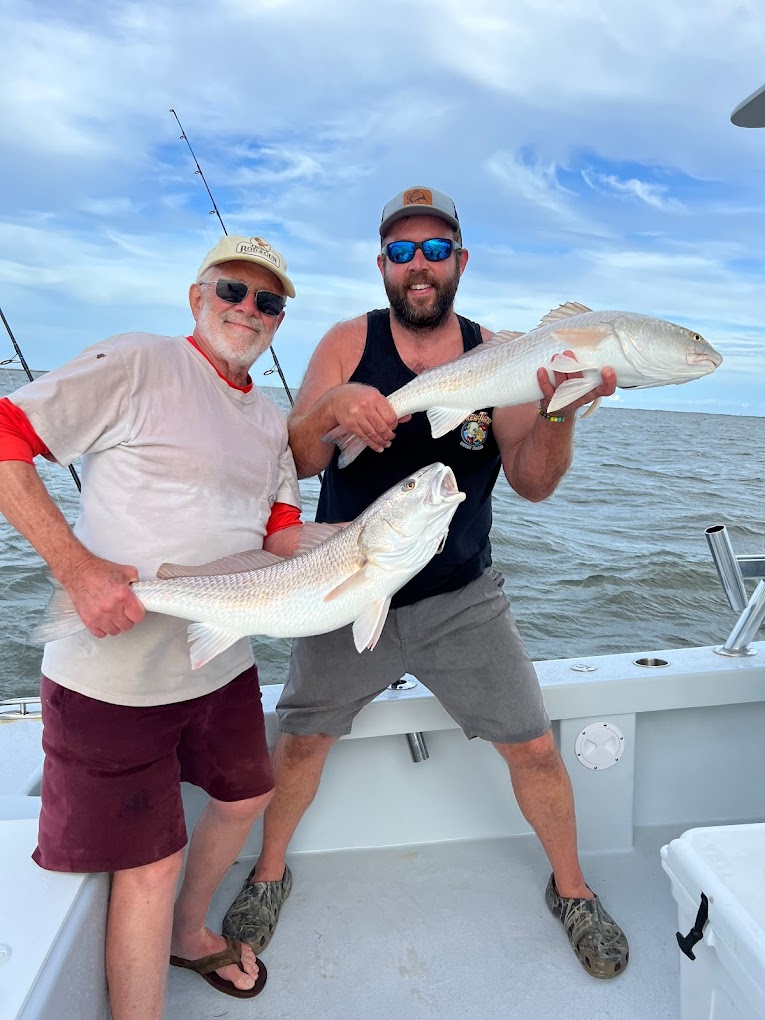
Red Drum
Red drum action stays strong into early fall, especially around the inlets, sound-side flats, and sloughs near the beach. These fish push bait hard along structure and can be caught on everything from cut mullet to soft plastics. Late summer is a prime window for both slot-size fish and larger bulls, especially around Oregon Inlet and Pea Island. Sight casting to singles and small groups becomes possible on calm days, while bait fishing at dusk and dawn keeps rods bent when the surf gets rougher.
Speckled Trout
As water temps start their slow decline, speckled trout become more consistent again. While they feed through summer, the real uptick starts at the tail end of August and carries through the fall. Look for them in current seams, grass edges, and near deeper cuts in the marsh. Topwaters still work early, but subsurface twitch baits and shrimp imitators become increasingly effective as mornings cool. Late summer into fall is when the average size jumps and patterns stabilize.
Flounder
Flounder fishing in the OBX transitions through late summer, with inshore numbers often shifting slightly deeper. Channels, docks, and bridge pilings continue to produce, especially on moving tides. Fall is also when larger flounder begin to stage near inlets ahead of their offshore migration. Drifting live bait or working bucktails on the bottom remains the go-to method, and while regulations may affect harvest windows, the fish are still present and active.
King Mackerel
King mackerel hang around longer than most casual fishermen expect, and late summer is often when the bigger fish start showing. These predators prowl nearshore wrecks and temperature breaks, especially within 10 to 20 miles of the beach. Live bait slow-trolled on light wire is a staple tactic, but fast-moving jigs and spoons work when they’re actively feeding. Calm days in September can offer some of the best action of the season.
Other Common Inshore Species
While the headline targets get most of the attention, there’s no shortage of other species that fill in the gaps between trophy bites. These fish keep the rods active and the coolers full for fishermen of all experience levels:
- Black Drum: Common around docks and soundside structure, often caught on shrimp or crab.
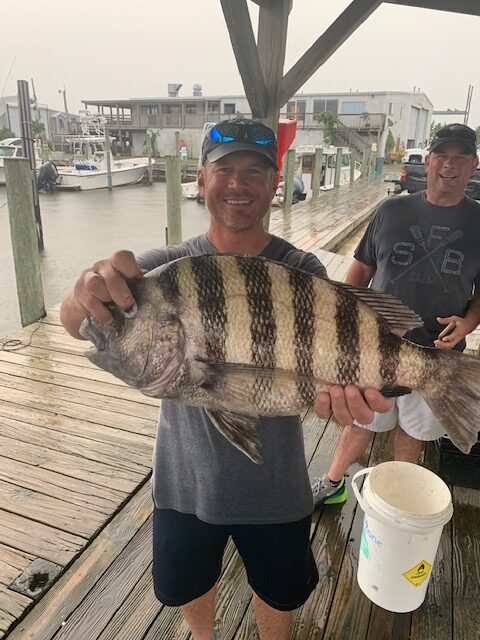
- Sheepshead: Still around bridge pilings and rock structure, especially where barnacles are thick.
- Pompano: A frequent surf zone visitor through early fall, especially on sand fleas or small jigs.
- Spot & Croaker: Abundant around piers and soundside creeks, perfect for family trips or bait stock.
- Sea Mullet (Whiting): A reliable bottom catch throughout the fall, especially on fresh shrimp.
- Weakfish: Sporadic but present in some years, often caught while trout fishing.
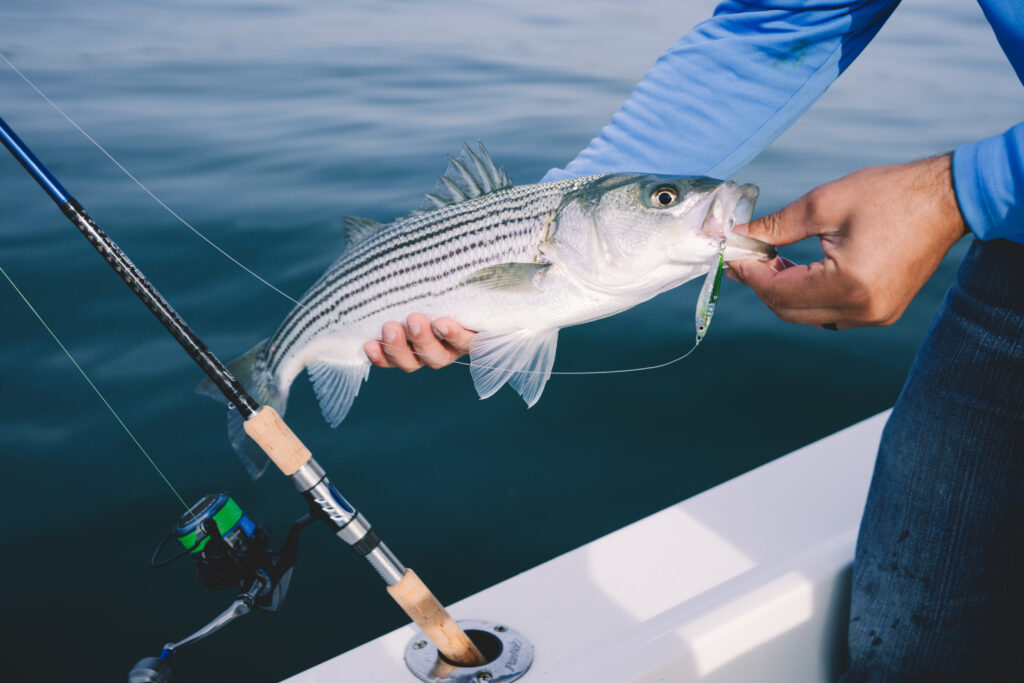
- Striped Bass: More of a northern OBX occurrence, they begin stirring in early fall, especially in brackish zones.
These species may not all be targets for trophy fishing, but they make up the fabric of the OBX inshore experience at summer’s end.
Nearshore and Pelagic Possibilities
Just a little farther from shore, the late summer to early fall transition opens the door to a surprising range of options for nearshore and offshore boats:
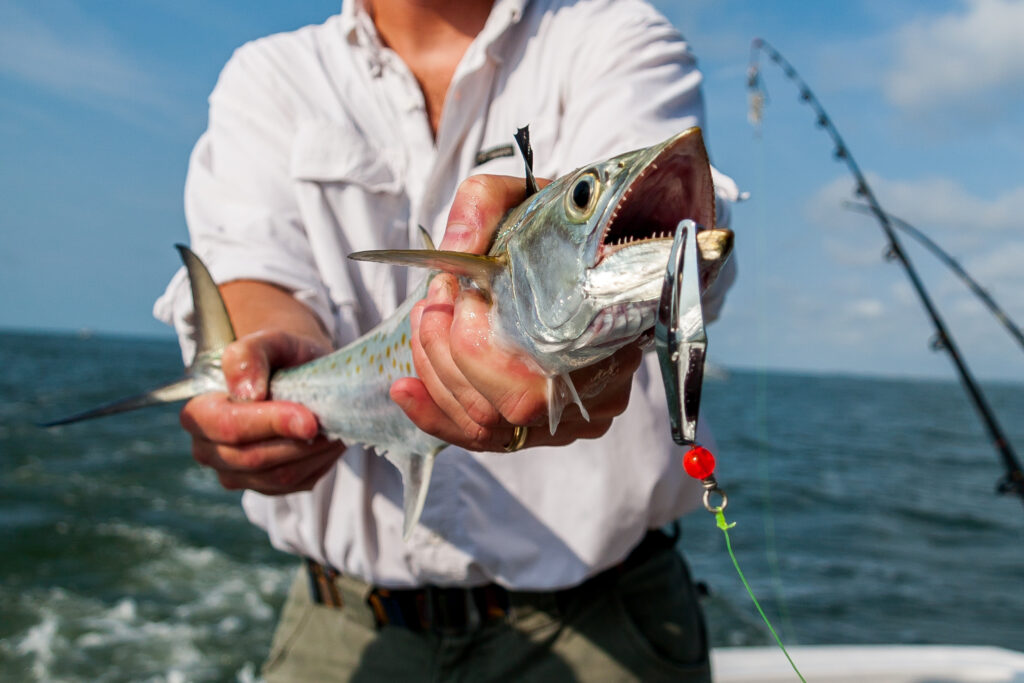
- Bluefish & Spanish Mackerel: Still thick along rips and shoals, with surface blitzes common during bait pushes.
- False Albacore: Begin their fall run by late September, offering fast-paced action on light tackle.
- Bonito: Occasionally caught while targeting other pelagics, especially near wrecks.
- Amberjack: Found near offshore towers and wrecks, aggressive and powerful.
- Cobia: While numbers taper, early fall can still produce stragglers on rays or structure.
- Triggerfish & Sea Bass: Consistent on deeper wrecks and reefs, ideal for bottom fishing trips.
- Mahi-Mahi: A few linger offshore if the warm water holds, often around weedlines or debris.
- Sailfish: Possible on offshore trolling trips through early fall, especially southeast of Oregon Inlet.
- Tuna (Yellowfin & Blackfin): Fall marks the kickoff for the tuna run, with action improving as temps drop offshore.
These nearshore and pelagic options add a layer of unpredictability and excitement to the OBX fishing experience in the shoulder season.
How to Approach Fishing After Summer
Fishing in the Outer Banks during the late summer into early fall is shaped by a mix of environmental shifts and bait-driven behavior. This stretch of the year rewards attention to detail, but it does not require overthinking. A practical approach, informed by conditions and species patterns, keeps things productive.
Water Temperature and Movement
The heat of high summer begins to taper off, and water temperatures remain warm enough to keep fish feeding actively. What changes is the staging behavior. Depth changes, current seams, and shaded structure become increasingly important as fish move away from scattered summer patterns and hold more tightly in specific areas. Early mornings often bring movement in shallower zones, while later in the day the bite shifts toward deeper water with current.
Bait Presence and Patterns
Bait remains abundant this time of year. Finger mullet, peanut bunker, shrimp, and small menhaden are active throughout the surf, sound, and inlets. Predatory fish stay close. Many inshore species rely heavily on ambush tactics as bait schools pass through narrow areas or get pressed against structure by the tide. Presenting a lure or live bait along the outer edge of these schools, rather than casting directly into the center, often produces a quicker strike.
Several effective options that match local forage include:
- Paddletail soft plastics with a subtle wobble
- Shrimp imitations on weighted jigheads
- Natural finger mullet or mud minnows, either live-lined or drifted
Tide and Time of Day
Tide movement influences fishing success more directly than the time on the clock. A falling tide near a creek mouth or funnel point can create excellent conditions even in the middle of the day. In contrast, a slack tide at sunrise may produce very little activity despite ideal lighting. While early mornings and late afternoons still offer favorable conditions, it is the moving water that consistently triggers feeding behavior.
Trout and flounder often concentrate where bait drains through narrow cuts or along the edge of grass beds. Red drum move onto shallow flats when rising water finally gives them access. Understanding how water flows and where it channels through key points leads to more consistent results.
Inshore Structure Strategy
Structure becomes more reliable during this shoulder season. Fish begin to hold close to pilings, jetties, ledges, and dock edges with greater consistency. Red drum favor areas where current wraps around hard cover. Speckled trout position just inside the shadow lines created by bridge pilings. Accuracy and timing become more important than gear specifics or lure type.
When the tide begins to move, bait often collects around vertical structure. These short feeding windows can be intense, so work each target efficiently and stay alert. You do not need a long bite window to have a productive session.
Gear Considerations
This time of year does not require specialized gear, but having the right setup improves results. A well-balanced inshore rig handles the range of species commonly encountered during the transition from summer into fall.
- Rod and Reel: Medium-action spinning rod paired with a 2500–3000 size reel
- Line: 10–15 lb braided mainline with a 15–20 lb fluorocarbon leader
- Terminal Tackle: Jigheads from 1/8 to 3/8 oz, live bait hooks, and simple popping cork rigs
- Lures: Soft plastics, topwaters, and twitch baits in natural colors
There is no need to bring excess gear. Choose tackle that allows for accurate casting, holds up in light current or surf, and performs cleanly around structure.
Weather and Wind Patterns
Late summer and early fall bring greater variability in conditions. Some days feature calm seas and light southwest breezes. Others bring strong northeast winds that churn the surf and reduce clarity. Rain events can impact water conditions quickly, and fronts tend to move through more frequently. Tracking the weather closely not only improves comfort but also provides insight into fish behavior.
Following a front, conditions often include cooler temperatures, higher pressure, and clearer water. Fish may respond by pulling tighter to structure or moving into deeper areas. South winds keep the heat in place and often concentrate bait in sheltered zones. Responding to these changes with adjustments in location or presentation usually produces better outcomes than relying on routine alone.
Seasonal Conditions and Timing
Late summer enters a different rhythm along the Outer Banks. Bait schools shift positions, structure begins holding consistent fish traffic, and target species such as drum, trout, bluefish, and king mackerel remain active across inshore and nearshore zones. From surf lines to creek mouths, the patterns reflect changes in light, tide, and wind.
Each day brings its own adjustments. Water clarity, current speed, and bait movement shape the layout of the bite hour by hour. Results come from watching conditions develop and responding deliberately. A successful trip may involve staying mobile, committing to a productive zone, or working a single tide window with precision based on what is happening in the water.
For those planning to fish this stretch, staying connected to real conditions makes all the difference. That’s where OBX Inshore Charters, based here on the Outer Banks, provides an advantage. We fish throughout this seasonal window and build each trip around current water behavior, wind influence, and feeding activity, so if you’re looking to get on the water while this bite is still in motion, book your trip with us today.